
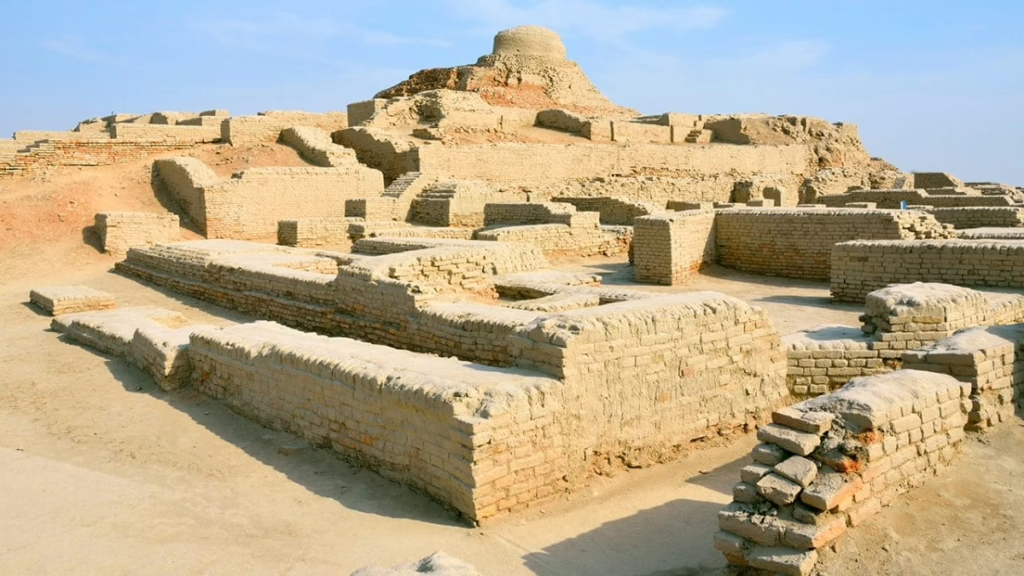
The Indus Valley Civilization is one of the oldest and most advanced ancient civilizations in human history, yet it remains one of the least understood. Flourishing over 4,500 years ago in South Asia, this civilization developed remarkable cities, sophisticated infrastructure, and complex social systems that rivaled those of other great ancient cultures, such as Egypt and Mesopotamia. Despite its achievements, many aspects of Indus Valley life remain hidden in mystery, making it one of history’s greatest unsolved puzzles.

Archaeological discoveries have revealed incredible knowledge of engineering, trade, and urban planning—but the civilization’s language, beliefs, leadership, and sudden decline continue to raise more questions than answers.
Cities Built with Scientific Precision
One of the most astonishing features of the Indus Valley Civilization is its advanced urban planning. Major cities such as Harappa, Mohenjo-daro, and Dholavira were constructed with remarkable precision and organization.
These cities featured:
- Straight, grid-patterned streets
- Advanced drainage and sewage systems
- Brick-lined wells in homes
- Public water tanks and reservoirs
- Standardized building materials
- Structured residential and commercial zones
Such planning suggests the presence of a highly intelligent administrative system—yet no clear evidence of kings, palaces, or royal dynasties has ever been found.
The Undeciphered Script
Perhaps the greatest mystery of the Indus Valley Civilization is its writing system. Thousands of seals and artifacts contain short inscriptions, symbols, and signs known as the Indus script. To this day, no one has been able to decode it.
Without deciphering this script, historians cannot understand:
- Their language
- Political systems
- Laws and governance
- Religious beliefs
- Social structure
- Trade agreements
Unlike Egyptian hieroglyphs or Mesopotamian cuneiform, no bilingual texts or translation keys have been discovered, leaving the civilization’s voice completely silent.
Who Governed the Civilization?
Most ancient civilizations were ruled by kings, emperors, or priestly elites. Strangely, the Indus Valley Civilization shows no clear signs of monarchy, royal tombs, or powerful rulers.
There are:
- No large palaces
- No royal statues
- No grand monuments to rulers
- No evidence of centralized kingship
This raises a fascinating question: how was such a massive civilization governed? Some scholars believe it may have been managed by councils, merchant groups, or community-based leadership systems—making it one of the earliest examples of organized, non-monarchical urban society.
Advanced Trade and Global Connections
The Indus Valley Civilization was not isolated from the world. Archaeological evidence shows extensive trade networks connecting it with Mesopotamia, Persia, and Central Asia.
Seals from Indus cities have been found in ancient Mesopotamian regions, proving long-distance trade. The civilization exported:
- Cotton textiles
- Beads and jewelry
- Pottery
- Metal tools
- Precious stones
The ancient port city of Lothal reveals dockyards and maritime infrastructure, showing advanced knowledge of navigation and sea trade.
Spiritual Life Without Temples
Religion played a major role in most ancient civilizations, yet the Indus Valley Civilization presents a mystery here as well. While structures like the Great Bath of Mohenjo-daro suggest ritual or spiritual practices, there is no clear evidence of temples, priesthoods, or organized religious institutions.
Archaeologists have not found:
- Large temples
- Religious scriptures
- Clear gods or deities
- Structured priestly systems
This leaves their spiritual beliefs largely unknown, making their religious life one of the biggest unanswered questions in ancient history.

The Great Bath: Ritual or Symbol?
The Great Bath at Mohenjo-daro is one of the most iconic Indus structures. Built with waterproof bricks and precise engineering, it appears to have been used for ritual bathing or ceremonial purposes.
However, its true purpose remains unknown. Was it religious, cultural, social, or symbolic? Without written records, scholars can only speculate about its meaning and importance.
The Mysterious Decline
Unlike civilizations destroyed by war or invasion, the Indus Valley Civilization seems to have declined gradually. There is little evidence of mass violence, large battles, or destruction layers.
Possible causes include:
- Climate change and drought
- Shifting river paths
- Environmental degradation
- Earthquakes
- Resource depletion
- Economic disruption
Most researchers believe the civilization didn’t collapse suddenly—it slowly faded as environmental and ecological conditions changed.
Lost Cities Still Underground
Many Indus Valley sites are still buried beneath soil, farmland, and modern cities. New discoveries continue to emerge, suggesting the civilization was far larger than currently known.
Every excavation brings new questions:
- How extensive was their empire?
- How advanced was their science?
- How complex was their governance?
- How did they maintain social harmony?
The deeper archaeologists dig, the more mysterious the civilization becomes.
Why These Mysteries Matter
The Indus Valley Civilization challenges traditional ideas of how civilizations develop. It shows that advanced societies can exist without kings, massive armies, or monumental temples. It proves that urban life, trade networks, and engineering excellence can thrive through organization, cooperation, and planning.
Its mysteries remind us that human history is far more complex than simple timelines and textbook summaries.
Final Thoughts
The Indus Valley Civilization is not just an ancient society—it is a silent civilization whose story is still waiting to be told. Its undeciphered script, unknown rulers, mysterious beliefs, and unexplained decline make it one of the world’s greatest archaeological enigmas.
Each brick, seal, and ruin carries a message we have not yet learned to read.
The Indus Valley Civilization stands as a reminder that even the most advanced human achievements can fade into mystery—leaving behind questions that echo through time.